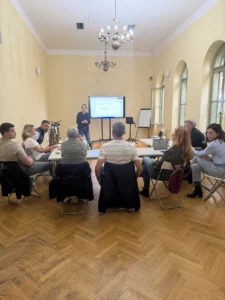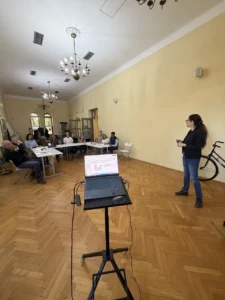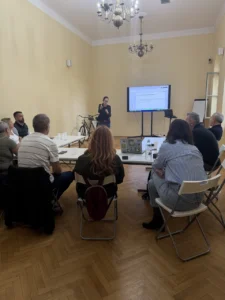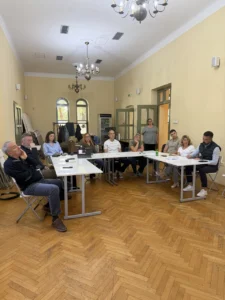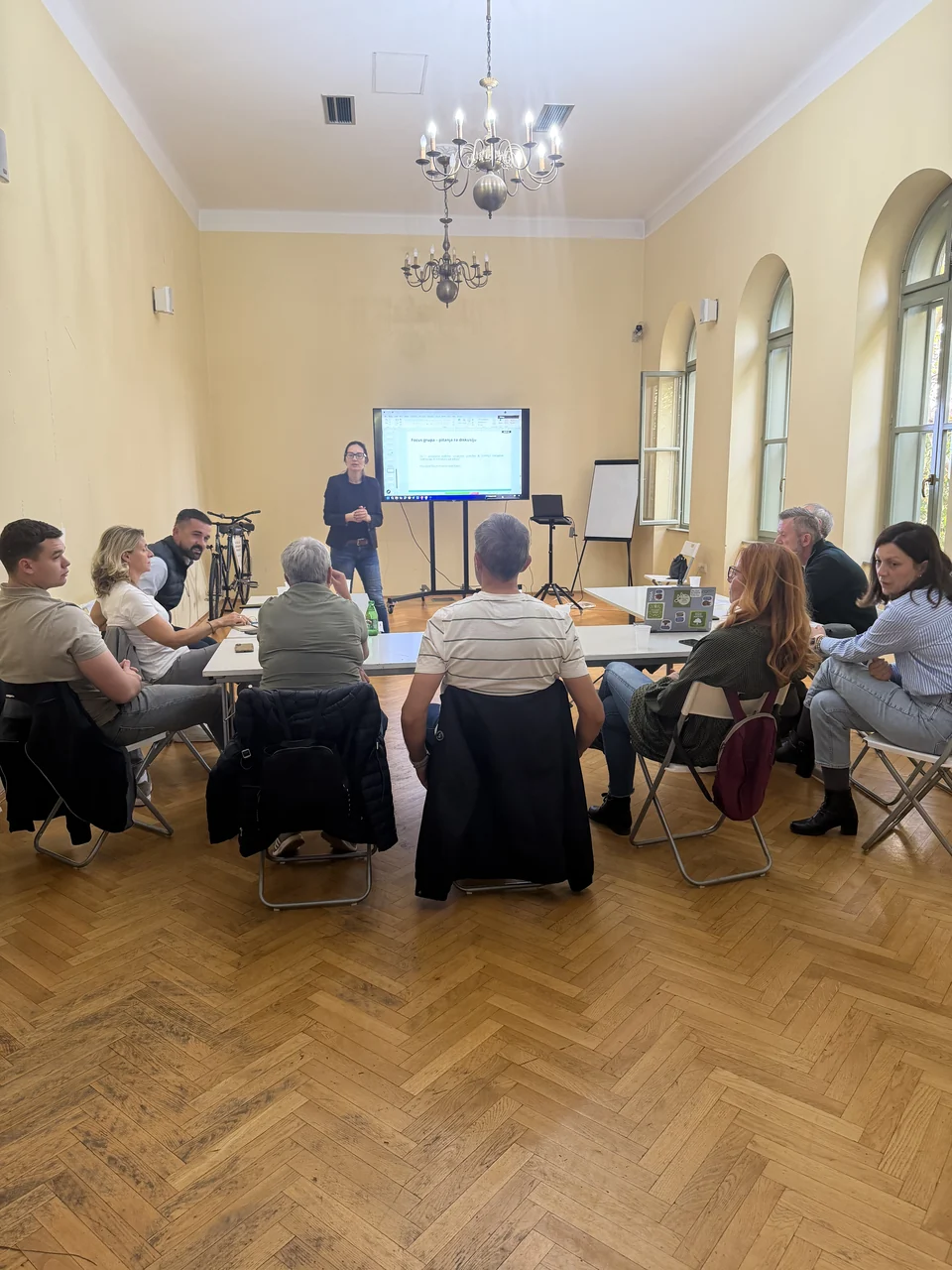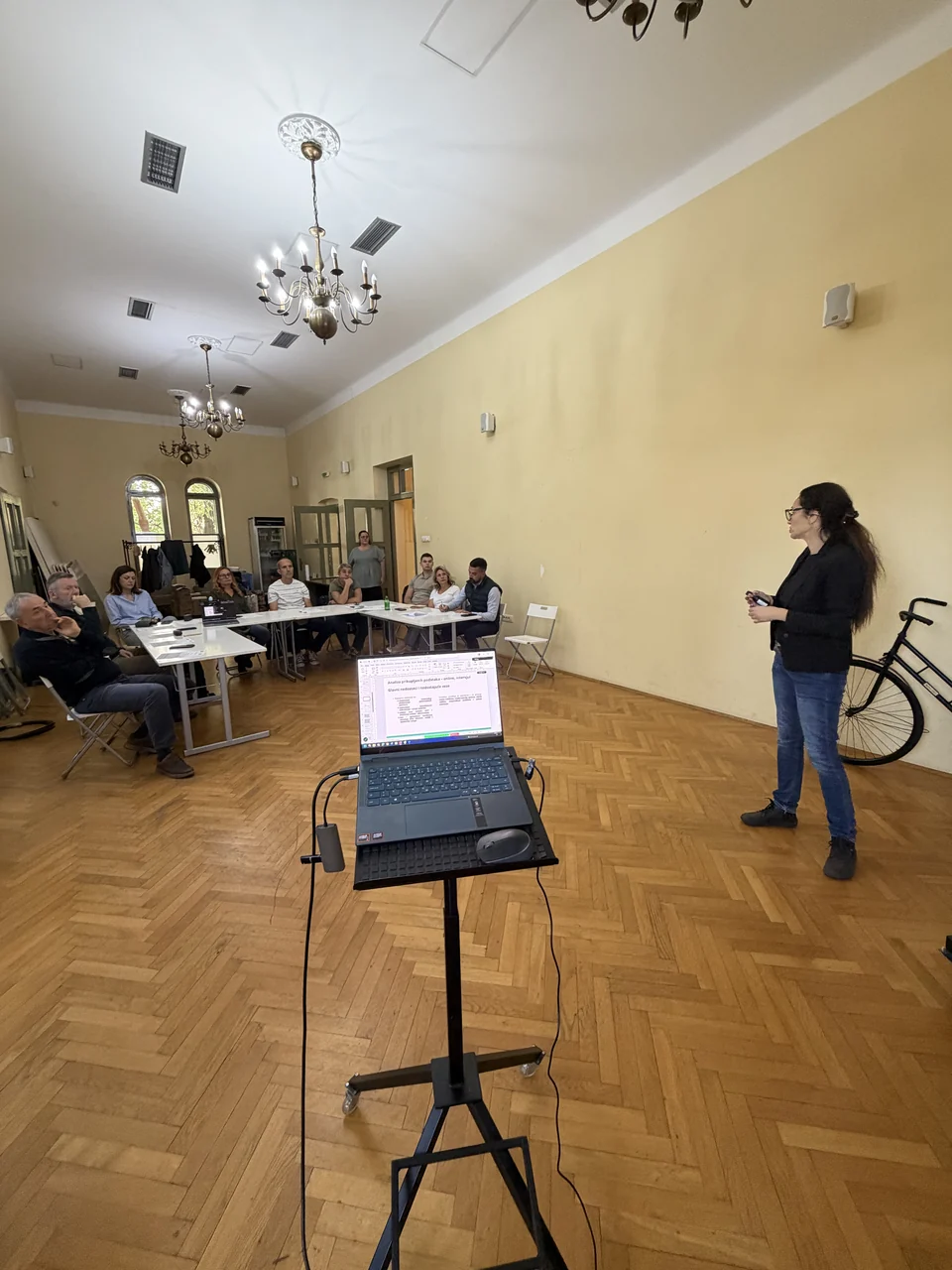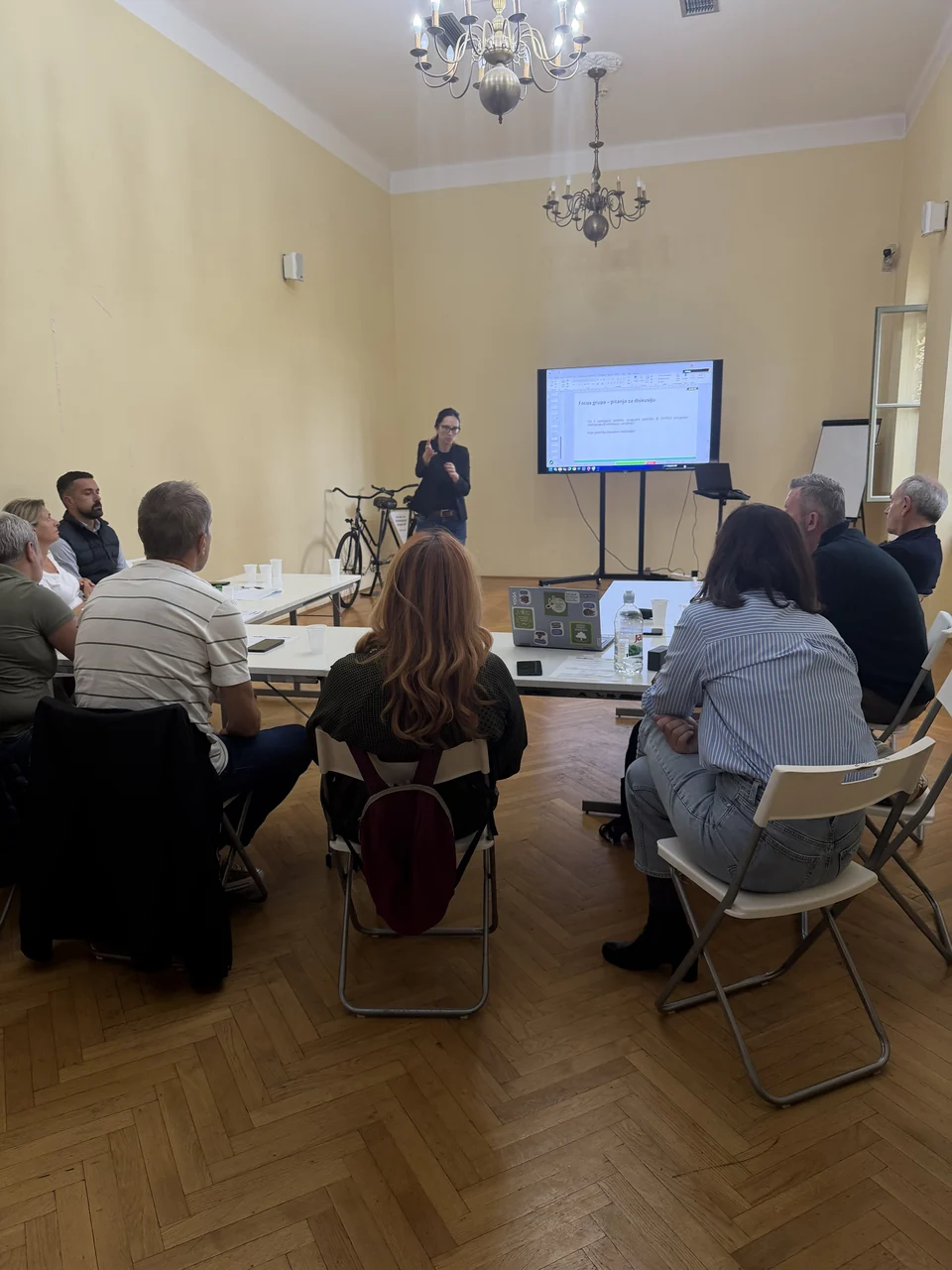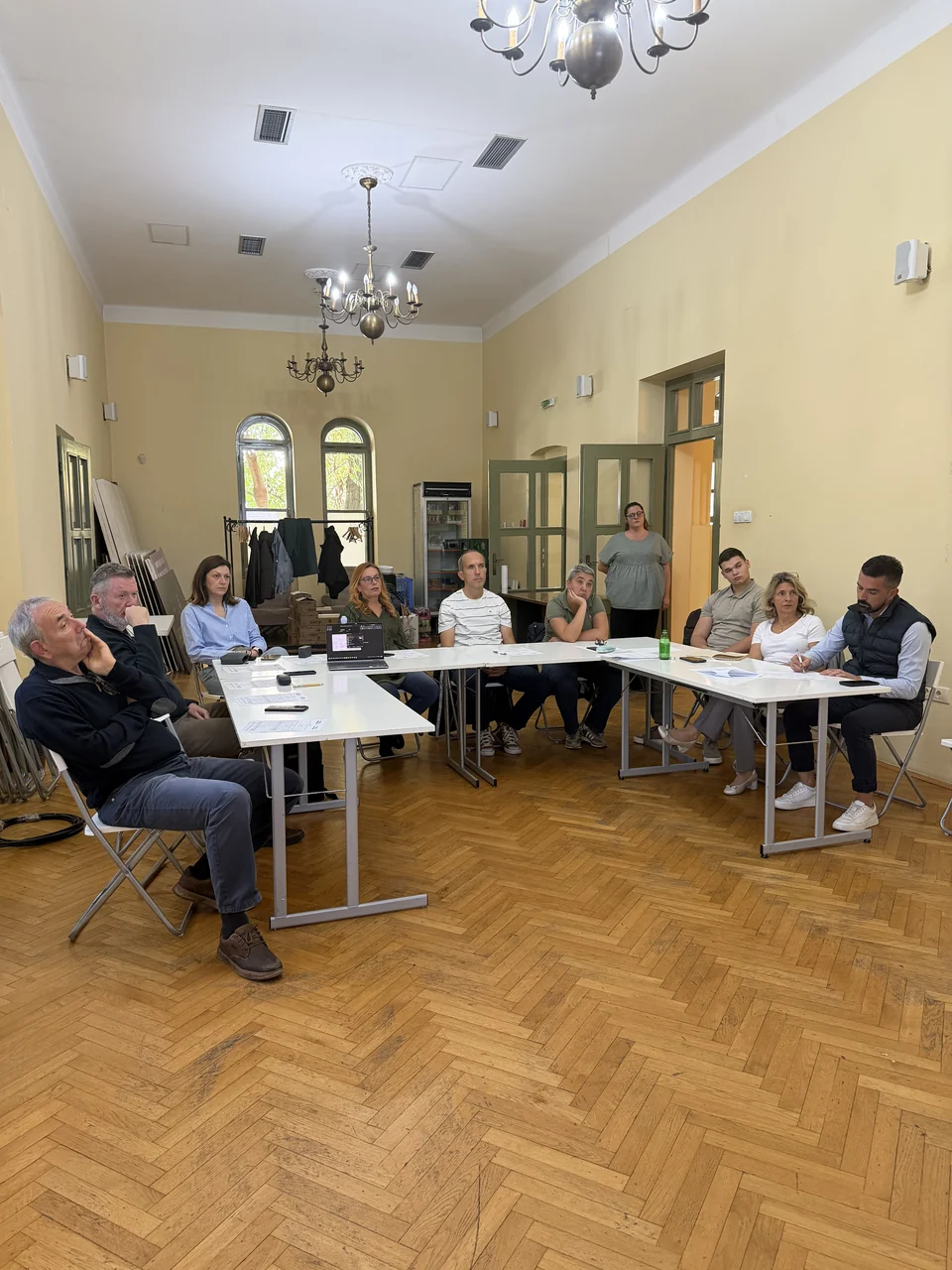
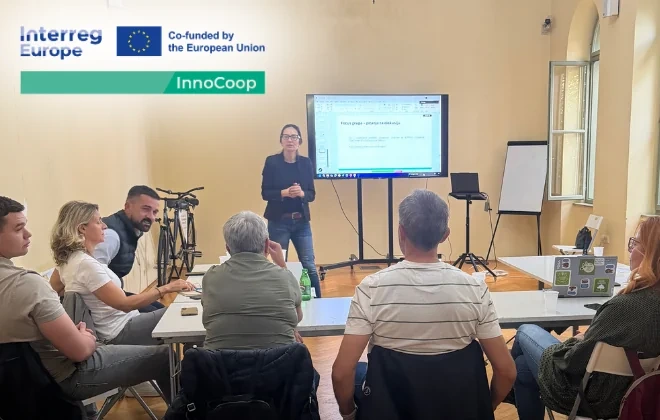
On Wednesday, 21 October 2026, a working group meeting was held at the Eđšeg Cultural Station in Novi Sad as part of the InnoCoop project, implemented through the Interreg Europe programme with co-financing from the European Union. The meeting focused on reviewing existing forms of cooperation, key challenges and opportunities to strengthen cross-sector connections in agribusiness, manufacturing and tourism.
During the meeting, Nikolina Pupavac, Senior Project Manager at the Regional Development Agency Bačka, presented the preliminary results of research conducted within the project, which included an analysis of available data, online questionnaires and interviews with representatives of the relevant sectors. The research aimed to assess the current level of cooperation between businesses, institutions and other organisations, as well as to identify opportunities for its further improvement.
The findings presented indicated that cooperation in Vojvodina most frequently takes place between enterprises through business relationships with suppliers, customers and processors. At the same time, a need was identified for stronger links between micro, small and medium-sized enterprises and research and educational institutions, the development of business networks and clusters, and improved access to information about support programmes and funding opportunities.
Particular attention was paid to examples of good practice and factors contributing to successful cooperation, including mutual trust, the exchange of knowledge and experience, shared use of resources and the development of innovative products and services. The opportunities offered by digitalisation, the application of modern technologies and stronger cooperation between traditional economic sectors were also considered.
The presentation was followed by an interactive discussion with working group participants, who had the opportunity to share their experiences, present the challenges they face in their day-to-day operations and highlight opportunities to improve cooperation in agribusiness, manufacturing and tourism. The joint discussion explored existing models for connecting stakeholders, barriers to establishing partnerships and potential activities that could contribute to stronger links between businesses, institutions and other relevant stakeholders.
The meeting represented an important step in understanding the needs of local and regional stakeholders and identifying opportunities to develop new forms of cooperation. The opinions and suggestions collected will contribute to further project activities aimed at strengthening cross-sector cooperation, encouraging innovation and improving the competitiveness of small and medium-sized enterprises.